
Wisconsin Home Insurance in 2026: What Record Hail Losses Mean for Your Premium
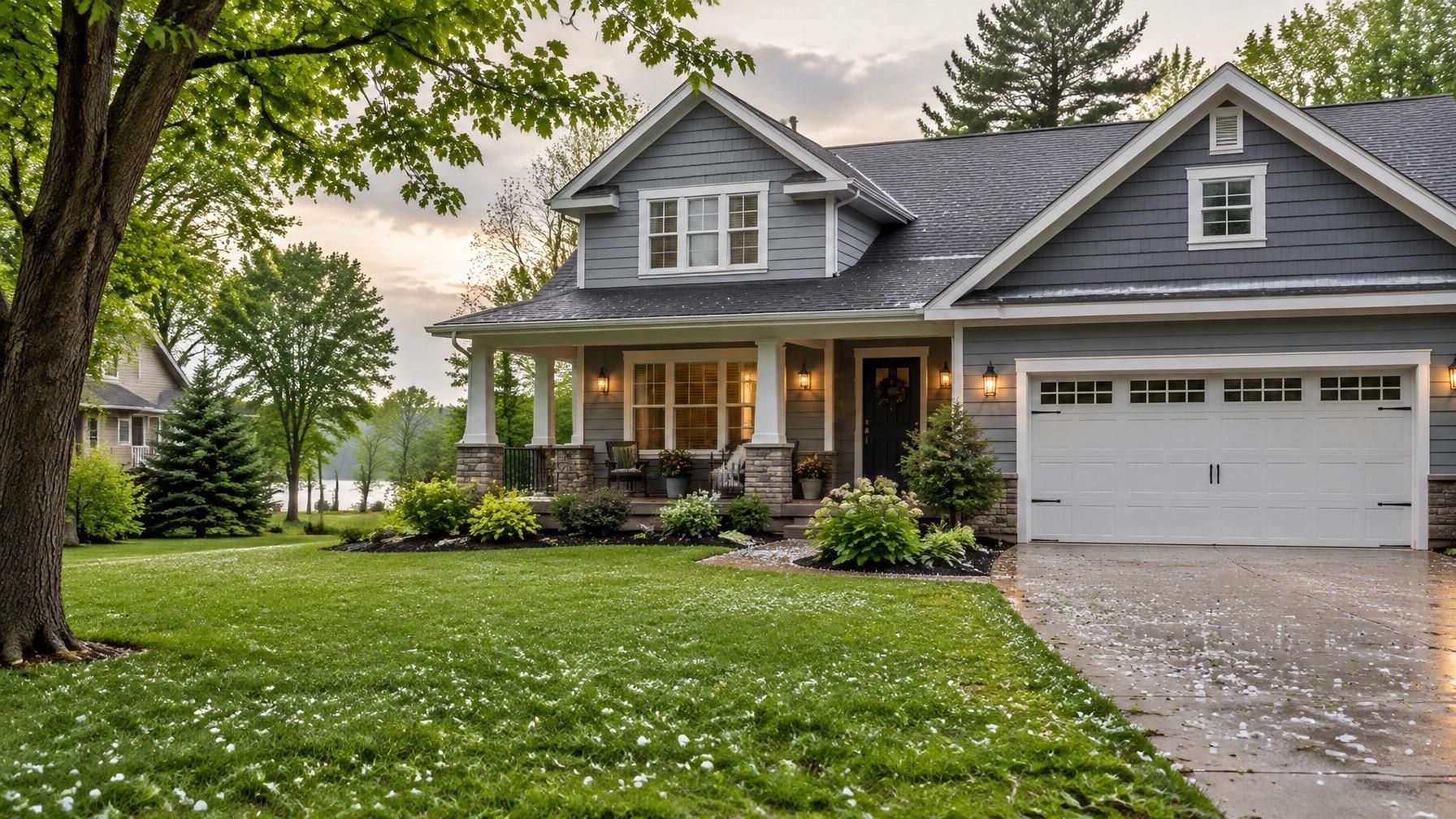
Hail can turn an ordinary spring or summer storm into a costly day for homeowners. A single storm may damage roofs across several neighborhoods at once, leaving families arranging inspections and repairs while insurers handle a wave of claims.
That wider pattern matters in Wisconsin. Recent industry reporting shows that severe hail and other damaging storms are contributing to very large insurance losses across the Midwest. Those losses can put upward pressure on home insurance premiums, but they don’t mean your own rate is predeter mined, or that every Wisconsin homeowner will see the same change.
Understanding what drives those costs, and what your policy says about roof damage, can help you make informed choices. We’re here to make that conversation clear and manageable
Why Hail Can Be So Expensive
Hail damage is not always dramatic from the ground. A roof may look fine while shingles, flashing, vents, or gutters have been damaged. When repairs are needed, the costs can add up quickly, espe cially when a storm affects many homes in the same area.
Insurers also have to account for more than the visible roof damage. A hailstorm can lead to claims for siding, windows, detached garages, and personal property, as well as vehicle damage. When many claims arrive at once, insurers face higher overall costs. Building-material prices, contractor availability, and the cost of labor can influence the final repair bill, too.
Hail is part of a broader group of severe storms that can include damaging wind and tornadoes. Cotality’s 2026 Severe Convective Storm Risk Report says a severe hail event expected once every few decades could cause nearly $30 billion in insured losses. Comparable to a major landfalling hurricane. That is a modeled estimate, not a forecast for a particular storm or a statement that Wisconsin experi enced that amount of damage.
The scale of these losses helps explain why hail is receiving attention from the insurance industry. State Farm, for example, reported paying more than $5.6 billion in hail claims in 2025. It’s a reminder that repeated storms can affect the cost of insurance well beyond the neighborhoods directly hit.
What This Can Mean for Wisconsin Premiums
When insurers see frequent, expensive claims across a region, they may adjust rates, deductibles, or coverage terms over time. Those decisions are influenced by many factors, including the insurer’s overall claims experience and the cost of rebuilding, not just hail losses in one town.
A recent NerdWallet analysis of home insurance pricing reported that modeled premiums in Wiscon sin rose faster than in Minnesota between the first quarters of 2023 and 2026. It estimated a 40.9% increase in Wisconsin and a 27.3% increase in Minnesota over that period.
Those figures describe an analysis of typical rates, not the increase on every homeowner’s renewal. Your premium can differ based on your home, location, roof, coverage choices, insurer, and claims history. The best way to understand your own renewal is to review the details rather than assume a statewide trend tells the whole story.
If you also own a home in Minnesota, our Minnesota home insurance guide explains some of the re gional factors affecting homeowners.
What You Can Check Before Renewal
You may not be able to control the weather, but you can take practical steps to understand your coverage and prepare for renewal. A few focused questions can make a difference.
1. Check your roof’s age and condition
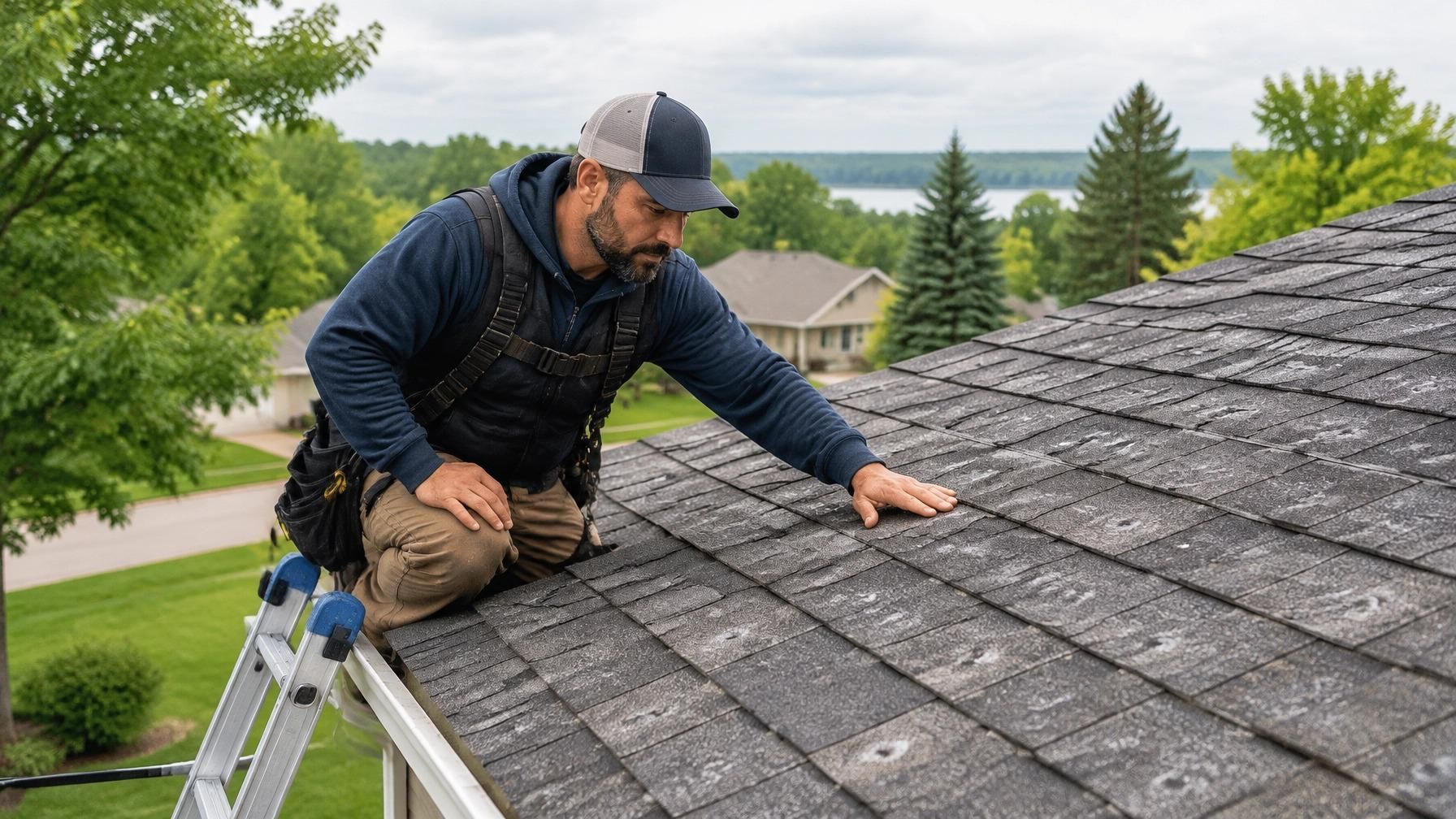
Make a note of when the roof was installed or last replaced. If you don’t know, past invoices, inspec tion reports, or your real estate documents may help. Look for missing or curling shingles, worn flash ing, and signs of past repairs, but leave roof inspections and repairs to qualified professionals
Insurers may consider roof age and condition when offering or renewing coverage. Keeping records of maintenance and improvements can make it easier to explain your roof’s history.
2. Understand your wind or hail deductible
A deductible is the amount you pay toward a covered claim before your policy pays its share. Some policies use one flat deductible for covered damage. Others may have a separate wind or hail de ductible, which may be a set dollar amount or a percentage of your home’s insured value.
A percentage deductible can be a larger amount than you expect. Ask your agent to show you how your deductible would work for your home, not just what the percentage is. Then consider whether you could comfortably cover that amount if a storm caused damage.
3. Ask how roof damage is settled
Your policy may settle covered roof damage based on replacement cost or actual cash value, subject to the policy terms and any limits.
- Replacement cost value (RCV) generally refers to the cost to repair or replace covered damage with comparable materials, without subtracting depreciation. The insurer may initially pay an amount that reflects depreciation and release the rest after eligible repairs are completed.
- Actual cash value (ACV) generally subtracts depreciation from the repair or replacement cost. That can mean a lower payment for an older roof.
Policies vary, and exclusions or special roof provisions may apply. Ask your agent to explain the roof settlement language in your specific policy and what documentation you may need after a loss.
4. Ask about discounts and compare like with like
Some insurers offer discounts for impact-resistant roofing, policy bundles, or other qualifying fea tures. Availability and requirements vary, so ask before assuming a roof upgrade will lower your premium.
Bundling home and auto insurance may help you qualify for a discount, but compare the total price and coverage, not just one line of the bill. A claims-free history may also be considered by some in surers. And when you compare quotes at renewal, make sure the coverage limits, deductibles, roof settlement terms, and exclusions are similar. A lower price may not be a fair comparison if the protec tion differs
A Coverage Review Can Replace Guesswork With Clarity
What if you’re not sure whether your roof is covered for replacement cost, or how your hail de ductible would apply? You don’t have to sort through policy language alone.
At The Gardner Agency, we listen to what matters to you, review your current coverage, and explain options in everyday language. We can help you understand how your home, roof, deductible, and policy terms fit together, whether you own a home in Wisconsin, Minnesota, or both.

Our residential property coverage page has more information about the home coverage we help clients explore. A review is also a good time to talk about changes you’ve made to your home, re pairs, or a renewal that looks different from last year.
The Gardner Agency has served customers since 2000 and works with homeowners across Minnesota and Wisconsin from our Duluth office. Contact us for a free home insurance review. Call 218-628-8002, text 218-722-2444, or visit gardneragencymn.com. We’ll help you understand your options, with no pressure.
Frequently Asked Questions
Does homeowners insurance cover hail damage in Wisconsin?
Many homeowners policies cover sudden hail damage, but the details depend on your policy. Your deductible, roof settlement terms, exclusions, and any special limitations can affect what the insurer pays. Review your policy or ask an agent to walk through it with you.
Will hail losses automatically increase my premium?
Not necessarily. Premium changes can reflect broader claims costs, repair expenses, location, roof de tails, coverage choices, and other underwriting factors. A regional trend does not determine the renewal price for every household.
What is the difference between a flat deductible and a wind or hail deductible?
A flat deductible is usually a fixed dollar amount. A separate wind or hail deductible may be a fixed amount or a percentage of your insured home value. Check your policy to find out which applies and what you could owe after a covered claim.
Can an impact-resistant roof lower my home insurance premium?
Some insurers offer discounts for qualifying impact-resistant roofing, but rules and savings vary. Ask your insurer or agent what materials qualify, whether documentation is needed, and whether the discount makes sense alongside the cost of the upgrade
When should I schedule a home insurance review?
A review is helpful before renewal, after replacing or repairing your roof, after renovating, or when your premium or deductible changes. If you’re unsure what your policy would pay after hail damage, that’s a good reason to ask questions now. Reach out to The Gardner Agency for a free review by phone, text, or through our website.
Recent Posts